For more than 200 years inventors worldwide have filed patents for wave-power technology of a dazzling variety of designs-bobbing objects ("ducks"), buoys, articulated rafts, floating bags, overspills, and many others. There has been no shortage of ideas. Many of these ideas are in fact technically feasible, so it seems a shame that this renewable energy resource has not been much used. The main challenge is building a system that is economically attractive when so many other forms of energy production (nuclear, fossil fuels) receive subsidies and already have infrastructure in place. There are some wave power systems in place around the globe: the Faroe Islands; Islay, Scotland; Oahu, Hawaii (providing power for the U.S. Marine Corps. base there); Santo, Spain; Portugal; and even the world's first commercial "wave farm" in England.
The World Energy Council has estimated that wave power could produce as much energy in a year as 2,000 oil, gas, coal and nuclear power plants' twice the amount of electricity produced worldwide-by generating as much as 2 terawatts (that's 1 trillion watts).
Not every place is a candidate for wave power generation. Prime locations identified are Scotland, northern Canada, southern Africa, and the Atlantic Northeast and Pacific Northwest of the United States. Experts have estimated that wave-power systems in the Pacific Northwest alone could generate up to 70 kW per meter of coastline.
Typical Designs
Wave-power systems can be located onshore or offshore, and come in a surprising range of designs. There are currently four basic "capture" methods: point absorbers (largely vertical, with a relatively small footprint on the surface); attenuators (horizontal footprint, arranged parallel to the waves to undulate with the flow); terminators (perpendicular to the waves); and overtopping (perpendicular to the waves, which break over the system). There are different power take-off systems including hydraulic ram (water hammer pumps water above the starting point); elastomeric hose pump (peristaltic, like your intestinal tract), pump-to-shore, hydroelectric turbine, air turbine, and linear electrical generator. Here are some systems already in operation, or close to it:
OFFSHORE: POINT ABSORBER SYSTEMS
1. The Salter "Duck"-In 1970 Stephen Salter ("the father of wave power"), a professor at the University of Edinburgh, designed a wave-power device that could both stop 90 percent of the wave motion and convert 90 percent of that into electricity, a standard that all other designed continue to be measured against. Ironically, the Duck itself never went into use. During the 1990s, a project based on the Duck and dubbed the OSPREY (Ocean Swell Powered Renewable Energy), commenced in the Clyde Estuary of the Scottish coast. Capable of generating 1 mW of power, the OSPREY was on its way to becoming an unqualified success until Hurricane Felix came along and sunk it (at great expense in terms of both money and confidence).
2. The AquaBuOY wave energy device-AquaBuOYs (Finivera Renewables) really do look like navigational buoys, and this is no coincidence. Obviously, maximum output from a wave-power device should be during those times when the waves are at their highest, but if the technology can't withstand rough seas (as with the OSPREY, above), they aren't much good. Operating on the premise that since navigational buoys can survive for decades in all sorts of conditions, the AquaBuOYs were designed to ride the waves for an estimated 100 years. The vertical wave action drives a two-stroke hose pump that directs pressurized seawater into a turbine connected to a generator; the resulting power is sent via an underwater transmission line. While at least four projects are in the permitting process (including one in Makah Bay, WA), as of this writing.
3. PowerBuoy "Like the AquaBuOY above, the PowerBuoy resembles a navigational buoy, although one with long cylinder extending far below that houses the mechanics of the system. These PowerBuoys (Ocean Power Technologies) are placed from one to five miles offshore in 100 to 200 feet of water, and can be ganged together to form a "wave-power farm" such as the one to be installed off the coast of Santo, Spain. That 1.39MW station will have one 40kW and nine 150kW PowerBuoys.
OFFSHORE: ATTENUATOR SYSTEMS
1. Pelamis - Ocean Power Delivery, Ltd., developed world's first commercial offshore wave-power facility using its Pelamis Wave Energy Converter, a string of steel cyclinders hinged to articulate. It lies half-submerged, like a 150-meter-long, bright red sea snake (pelamis is the genus for the sea snake), more or less facing into the waves. The cylinders contain hydraulic pumps activated by the wave action; the electricity comes as high-pressure oil gets pumped into generators. The first phase of the wave farm, located 5 km off the coast of Portugal, comprises three 750kW Pelamis "snakes" that combined to generate 2.25 MW; another 28 are expected to be added, bringing the total power generated to 22.5 MW'enough to provide electricity for more than 15,000 homes.
OFFSHORE: TERMINATOR SYSTEMS
1. Nearshore OWC-This is an offshore version of the Limpet, described below.
OFFSHORE: OVERTOPPING SYSTEMS
1. Wave Dragon-Overtopping systems work very much like hydroelectric dams, using the potential energy of water stored at an elevation higher than the turbines it drives. The Wave Dragon overtopping system funnels the waves into its own reservoir to create a head; the water is then released through channels that contain turbines. The Wave Dragon is moored 25 to 40 meters offshore in deep water, somewhat like a floating beach.
ONSHORE: OSCILLATING WATER COLUMN:
1. Limpet (Land Installed Marine Powered Energy Transformer)- This an oscillating water column (OWC) system to convert the waves' kinetic energy to electrical power. Picture a box with the open end submerged but slightly tilted toward the incoming waves, with air trapped inside the box. Now imagine there is a narrow outlet for this air, and inside this tube is a turbine. As the waves raise the level of the water inside the box, the air rushing in and out of the tube powers the turbine. A Limpet system (WaveGen) in Islay, Scotland, uses an inclined oscillating water column (OWC) system optimized for the area's anverage annial wave intensity, and feeds a pair of 250kW generators. The Limpet power station in the Faroes is very similar. WaveGen also designs a near-shore oscillating water-column system.
There are many companies designing wave-power systems using these and other designs (such as the tapered channel system, an onshore system, and the pedulor system, an offshore device), and new ones seem to come along frequently as more countries come to recognize the potential of wave power.
Wave Power Advantages
1. Wave energy is an abundant and renewable resource.
2. Even though not every country has coastline, the combined potential output of wave-power generation would meet all the electricity needs of the world.
3. Although the equipment represents a substantial investment, the "fuel" is free and not confined by geopolitical boundaries.
4. The effect on the environment is deemed to be minimal.
Wave Power Disadvantages
1. These are most effective near coastlines, of which there is a finite supply.
2. Large scale systems are still in the early stages.
Take charge of your energy use! Free ebooks that show you how! Visit the best Alternative Energy Source. Click over to Alternative Energy HQ to get your free ebooks and terrific resources on Alt Energy
Article Source: http://EzineArticles.com/?expert=Kevin_Rockwell
The Oceans' Wave Power


 Labels:
wave power,
wind power
Home Wind Power - How Easy is it to Use Wind Power at Home?
For some reason, there is a misconception that home wind power is something that is too expensive for the average family to have. This is totally wrong, because it is possible for anyone to make their own power for around $200 or less.

The answer is...very simple! Building a windmill is not as hard, or expensive, as you may think. Like I said before, the price for building home own windmill will be around $200. This is a very cheap one time investment. It is small if you take into context the amount of years you will be saving money on your energy bill.
Home wind power is also easily attainable because of the fact that with the right plans, making a windmill can be very easy. It can actually make quite a fun family project. If the instructions are followed, the whole process can be done in only a matter of days.
But where can you get these plans? There are actually several products available online that offer amazingly detailed and easy windmill plans. They also will tell you how to get the materials, and even get some of them for free.
Many of these home energy programs will also give you access to plans to make your own solar power as well. They will reveal many tips on how to save energy in your home and really bring down you power bill significantly, if not eliminate it altogether.
On my website I review the top 3 home wind power programs available. You can find it listed below. I encourage you to look into home wind power because the growth of this type of renewable energy is growing rapidly.
Want to reduce your power bill by 80% or more?
Learn how to make your own Home Wind Power.
My website, http://makeyourownwindmillnow.blogspot.com/2008/07/make-your-own-windmill-reduce-energy.html explores how to make your own energy while helping the environment and saving yourself money.
Article Source: http://EzineArticles.com/?expert=Cory_Sanders
Labels:
wind power
Modern Alchemy: Wind to Water
The Perth SWRO plant in Western Australia utilizes a combination of clean wind power and the highest efficiency ERD available for one of the most efficient and environmentally friendly desalination plants in world.
A Thirsty Nation
The Solution
Facing impending water shortages, in April 2005, Western Australia's (WA) Water Corporation made a decision to form a public-private partnership with global water treatment company Degrémont. Degrémont has a 25-year operation agreement with the government owned Water Corporation. The first train (of 12 trains) of the Perth Seawater Desalination Plant (PSDP) is on target to start producing fresh water in November 2006.
The144,000 m3/d Perth SWRO plant, located at Kwinana, will be the largest SWRO plant in the Southern and Eastern hemispheres and is expected to augment the water supply for Perth by more than 17%.
A Novel Plant Design that’s Earth Friendly
As part of Water Corporation and WA’s very progressive stand of not producing additional greenhouse gases, electricity for the plant will be generated by a novel 80 MW wind farm located in WA’s Midwest region. The wind farm, already commissioned, is expected to contribute 270 GWh/year into the general electrical grid, offsetting the Perth SWRO Plant estimated electrical requirement of 180 GWh/year. Once in operation the Perth SWRO plant will have the distinction of being the worlds largest “green-powered� desalination plant.
The plant, with 12 SWRO trains with a capacity of 160,000 m3/day and six BWRO trains delivering a final product of 144,000 m3/day, will have one of the world’s lowest specific energy consumptions, due in part to the use of Energy Recovery, Inc.’s (ERI's) PX Pressure Exchanger‚ energy recovery devices (ERDs). The ERI PX is an isobaric chamber type of ERD which recovers energy in the brine stream and delivers it to water going to the membrane feed at a net transfer efficiency of up to 98%, which makes it the world’s most efficient ERD commercially available.
The Perth plant will also have one of the most comprehensive environmental monitoring programs in the world, continuously monitoring the seawater intake and brine outfall as a condition of its continued operation.
The combination of unheralded environmental protection and monitoring, low specific energy consumption, and the use of a renewable energy make the PSDP a world model for providing water in an environmentally sound and sustainable manner, almost magically converting wind to fresh water.
Cost-Effective Design and Solution
At A$323 million (387 million including integration assets) for the 144,000 m3/day Perth plant it is also one of the most cost effective projects of its size (compare to an estimated A$869 million (1.153 billion with integration assets) for the planned 125,000 m3/day Australian Gold Coast SWRO project). The Water Corporation has demonstrated that by using a well planned alliance approach with a desalination plant can be environmentally responsible, well designed, and very cost effective all at once.
ERI PX Details
The Water Corporation and Degremont team selected ERI’s PX technology for their optimized design because they offer significant benefits to SWRO plant designers and operators including the highest available net energy transfer efficiency and the lowest lifecycle costs. Additional benefits include maximum design flexibility, reduced high-pressure pump costs and operational flexibility.
Among the commercially available isobaric ERDs, the PX Pressure Exchanger isobaric ERD also provides the following added advantages:
• Highest available Net Transfer Efficiency – up to 98%
• No bearings, seals, valves - maintenance free operation
• Total design flexibility – for changing conditions
• No wetted metal parts that are subject to corrosion
• No required complicated computer controls
• No vibration, lateral loads, or pulsation
• No potential metal fatigue issues
• Dependability and long life design
• Installed redundancy for maximum on-line time
• Only 80 kg per each PX-220, no special skid or foundation requirements
• Housed in standard SWRO pressure vessels, no special tools required
• Smallest footprint by a factor of 6-10 times
• Local support and service in Europe, Australia, Asia, Pacific, Middle East and North Africa, and the Americas.
Today, PX technology has emerged as the industry standard solution for seawater desalination, with over 5,400 PX’s installed in plants worldwide, significantly reducing the cost to produce over 4.5 million m3/day of fresh water, and saving customers an estimated 502 MW of energy or $264 million a year in operating costs, and reducing CO2 emissions by nearly 4 million tons over a 20 year life of a plant the size of Perth.
About the Author: Shawn Meyer-Steele writes articles relating to Energy Recovery Inc., a Water resources Company that provides affordable Seawater Desalination with the PX Pressure Exchanger which reduces energy costs up to 98%.
Labels:
environment,
wind power
Why wind power will not rule?
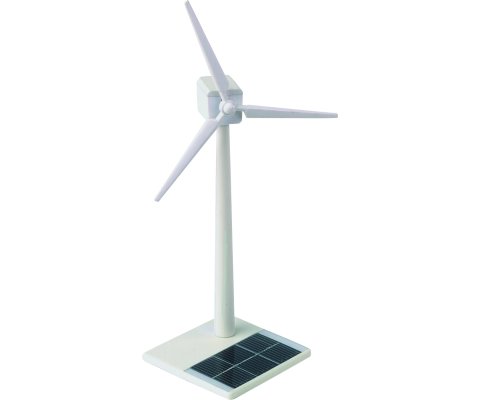
In the battle for the best renewable energy resource, the two that are constantly growing, building new technologies and give more renewable energy information, are the solar power and wind power. many renewable energy companies are straggling to put their technology on top, to gain more influence and more renewable energy credit. who will eventually win?
I think that in spite of the fact that wind power technologies are advanced, and currently wind turbines base power plants are more efficient and cheap than solar panels, It will not turn out to be the leading technology of the future.
The reason for that is the huge difference in terms of energy between the these two resources.
The sun energy is by far more intense, and more reliable than wind energy. The sun is technically the sole provider of energy to the living world, and we only use a minute part of the energy that arrives to earth.
Moreover, wind energy is not always available and require more specifications than solar panels.
Labels:
clean energy,
green energy,
renewable energy,
solar energy,
wind power
3 Advantages of Homemade Wind Power

Well one thing we keep hearing about is alternative sources of energy. Sources that are renewable. However most of it is just talk without any real solutions. What we really need to do is to look at the situation as an individual rather than a group.
As individuals we can incorporate things into our homes that utilize renewable energy sources like the wind and the sun. They can be huge money savers and they don't cost a small fortune to build. In fact a couple hundred bucks and some elbow grease can build you a wind power unit for your home. Just look at these advantages homemade wind power will give you.
Money Saver - Wind power can save you money on your electric bill by supplying you with electricity that you don't have to pay for other than the initial small investment. It's like paying for the electricity once but you get to keep using it over and over.
Wind Is Green - The wind is a great way to help our environment because there are no harmful emissions generated in turning it into electricity.
Wind Is Renewable - There is no end to the end. It just keeps blowing and we keep reaping its benefits.
The advantages of wind power far outweigh the small investment it takes to implement it. In fact, it pays for itself over and over. We should all be taking advantage of this renewable, clean resource to ease our bank accounts and environment.
Find out how you can save money by harnessing the wind here: HOMEBUILT WIND POWER
Article Source: http://EzineArticles.com/?expert=Scott_Sickles
Labels:
wind,
wind power
Working With The Power Of Wind
Wind power is growing in popularity as an alternative to fossil fuel and one of the best of the renewable energy sources. The use of wind power requires wind turbines. Wind turbine generators do little to harm the environment and are far preferable in this regard to fossil fuel. The only disadvantage is that they cannot be used everywhere. In order to effectively use turbines to generate wind power you would need an average wind speed of at least 13 miles per hour. Obviously, that is not found everywhere.
Palm Springs California is ideal for wind turbines that generate power and as you pass through there along highway 10 you will see these wind turbines in various sizes. Called a wind farm, This San Bernadino Mountain area has over 4000 windmills in its San Gorgonio Mountain Pass. These turbines provide enough wind power to provide electricity to all of Palm Springs and the Coachella Valley area as a whole. Most of the current wind power generation in the U.S. resides in California.
The largest of the wind power windmills is 150 feet in height with blades that stretch halfway across a football field. There are compartments at the windmills top that house its generators, its hub and its gearbox. These weigh at least 30,000 and as much as 45,000 pounds. At this size the turbine for wind power may cost more than 300,000 but will provide 300 kilowatts each hour. This amount of wind power is enough to keep one typical household in electrical power for an entire month.
The American Wind Energy Association AWEA is a U.S. – wide non-profit organization promoting wind power as a clean electrical source for consumers the world over. AWEA represents developers of wind power projects, those who are in the business of supplying wind power equipment, wind power service providers, manufacturers of wind power parts, utilities that provide wind power for electrical power, scientists researching green energy resources that include the use of wind power and others involved in any way in the wind power industry. Hundreds of advocates of wind power are also members of AWEA.
The American Wind Energy Association provides the latest information on the operation of current or potential wind power projects, the ongoing development of new wind power projects, companies who work in the burgeoning industry, the development of new wind energy technology, and government legislation and policies that pertain to the use, production and funding of wind power and other renewable energies.
AWEA acts as a clearing house for the wind power industry, and as such communicates the pertinent statistics, facts and news. From AWEA consumers and others can find out the latest legislative decisions and efforts, including the best information on grants and loans to aid in the implementation of residential, commercial and governmental wind power projects.
AWEA publishes and disseminates the only weekly wind power newsletter that exists anywhere. It also hosts an annual wind power conference, with presentations on the latest technological developments and trends as well as access to businesses offering help in its implementation.
James Copper is a writer for http://www.newcareerskills.co.uk/domestic-energy-assessor-training.htm

Labels:
wind power
Working With The Power Of Wind

Palm Springs California is ideal for wind turbines that generate power and as you pass through there along highway 10 you will see these wind turbines in various sizes. Called a wind farm, This San Bernadino Mountain area has over 4000 windmills in its San Gorgonio Mountain Pass. These turbines provide enough wind power to provide electricity to all of Palm Springs and the Coachella Valley area as a whole. Most of the current wind power generation in the U.S. resides in California.
The largest of the wind power windmills is 150 feet in height with blades that stretch halfway across a football field. There are compartments at the windmills top that house its generators, its hub and its gearbox. These weigh at least 30,000 and as much as 45,000 pounds. At this size the turbine for wind power may cost more than 300,000 but will provide 300 kilowatts each hour. This amount of wind power is enough to keep one typical household in electrical power for an entire month.
The American Wind Energy Association AWEA is a U.S. – wide non-profit organization promoting wind power as a clean electrical source for consumers the world over. AWEA represents developers of wind power projects, those who are in the business of supplying wind power equipment, wind power service providers, manufacturers of wind power parts, utilities that provide wind power for electrical power, scientists researching green energy resources that include the use of wind power and others involved in any way in the wind power industry. Hundreds of advocates of wind power are also members of AWEA.
The American Wind Energy Association provides the latest information on the operation of current or potential wind power projects, the ongoing development of new wind power projects, companies who work in the burgeoning industry, the development of new wind energy technology, and government legislation and policies that pertain to the use, production and funding of wind power and other renewable energies.
AWEA acts as a clearing house for the wind power industry, and as such communicates the pertinent statistics, facts and news. From AWEA consumers and others can find out the latest legislative decisions and efforts, including the best information on grants and loans to aid in the implementation of residential, commercial and governmental wind power projects.
AWEA publishes and disseminates the only weekly wind power newsletter that exists anywhere. It also hosts an annual wind power conference, with presentations on the latest technological developments and trends as well as access to businesses offering help in its implementation.
About the Author: James Copper is a writer for http://www.newcareerskills.co.uk/domestic-energy-assessor-training.htm
Labels:
green energy,
wind,
wind power
