Showing posts with label energy. Show all posts

Upscale Goes Green: Homeowners Focus Increasingly on Sustainable Energy, Renewable Building Materials

by: Aldene Fredenburg

A quiet revolution is going on in the real estate sector. Many successful professionals are putting considerable money into building their own dream homes, and many of those professionals are choosing to build according to green principles.

Perhaps the first decision these new homeowners face is how to heat and cool their homes. Before even considering what sort of heating and cooling system they will choose, they need to decide on a design and materials for the exterior structure. Alternative building methods including rammed earth, straw bale, and flying concrete construction feature thick walls, often over a foot thick, which conserve heat in the winter and keep the home cool in the summer. Some homeowners are even opting for subterranean dwellings, using the natural insulating quality of the earth to lessen their need for additional heating. Even when opting for conventional wood structures, homeowners are choosing the latest insulation materials, which offer optimal heat conservation with little to no outgassing of toxic fumes.

Energy-conserving heating systems, some of which create radiant heat from hot water pumped through pipes beneath the floors, save on energy; passive solar construction - homes with south-facing exposure and large windows - allows the sun to warm the home. Solar panels provide electricity for lights and electrical appliances, and gray water systems recycle used water for additional use in the home. Some homeowners in colder climates opt for wood- or wood-pellet-burning furnaces rather than the conventional oil furnace, installing modern furnaces designed to minimize emissions.

Green-building homeowners and more and more developers opt for natural and sometimes manmade materials created from renewable resources, materials which do not expose residents to health risks. Vinyl, which is infamous for outgassing toxic fumes, is rejected in favor of safer materials; hardwood flooring, much of it harvested from old-growth forests, is replaced with materials like bamboo, and cork, two renewable materials providing two very different, attractive looks in flooring.

Those not in the position to design and build their own home still have the option of "greening" an existing home, using a wealth of safe, nontoxic natural materials. Conventional plywood, which is manufactured using urea formaldehyde, can be replaced with a number of new, safer materials, including "Plyboo," created from bamboo. Kiln-fired clay tiles, wood from sustainable forests, natural, safe interior and exterior paints, and a host of other materials help create a clean, healthy home environment.

Building and renovating green currently costs more than using conventional materials; some green builders estimate the difference at about 15 percent. However, recently wood prices have soared, and increasing transportation costs due to the rising cost of gasoline and diesel has impacted the price of building materials, so the difference in cost between conventional and green building may well even out. As it stands now, increasing numbers of prospective homeowners are willing to pay a premium for a home made of attractive, sustainable, and healthy building materials.


About The Author
Aldene Fredenburg is a freelance writer living in southwestern New Hampshire and frequently contributes to Tips and Topics. She has published numerous articles in local and regional publications on a wide range of topics, including business, education, the arts, and local events. Her feature articles include an interview with independent documentary filmmaker Ken Burns and a feature on prisoners at the New Hampshire State Prison in Concord. She may be reached at amfredenburg@yahoo.com.


Digg Technorati del.icio.us Stumbleupon Reddit Blinklist Furl Spurl Yahoo Simpy

What You Should Know About Green Energy?

James Copper


Green energy refers to the use of power that is not only more efficient than fossil fuel but that is friendly to the environment as well. Green energy is generally defined as energy sources that dont pollute and are renewable.
There are several categories of green energy. They are anaerobic digestion, wind power, geothermal power, hydropower on a small scale, biomass power, solar power and wave power. Waste incineration can even be a source of green energy.
Nuclear power plants claim that they produce green energy as well, though this source is fraught with controversy, as we all know. While nuclear energy may be sustainable, may be considered renewable and does not pollute the atmosphere while it is producing energy, its waste does pollute the biosphere as it is released.
The transport, mining and phases before and after production of nuclear energy does produce and release carbon dioxide and similar destructive greenhouse gases. When we read of green energy, therefore, we rarely see nuclear power included.
Those who support nuclear energy say that nuclear waste is not, in fact, released into our earths biosphere during its normal production cycle. They stress as well that the carbon dioxide that nuclear energy production releases is comparable, in terms of each kilowatt hour of electricity, to such sources of green energy as wind power.
As an example of the green energy production the average wind turbine, such as the one in Reading England, can produce enough energy daily to be the only energy source for 1000 households.
Many countries now offer household and commercial consumers to opt for total use of green energy. They do this one of two ways. Consumers can buy their electricity from a company that only uses renewable green energy technology, or they can buy from their general supplies such as the local utility company who then buys from green energy resources only as much of a supply as consumers pay for.
The latter is generally a more cost - efficient way of supplying a home or office with green energy, as the supplier can reap the economic benefits of a mass purchase. Green energy generally costs more per kilowatt hour than standard fossil fuel energy.
Consumers can also purchase green energy certificates, which are alternately referred to as green tags or green certificates. These are available in both Europe and the United States, and are the most convenient method for the average consumer to support green energy. More than 35 million European households and one million American households now buy these green energy certificates.
While green energy is a great step in the direction of keeping our environment healthy and our air as pollutant free as possible, it must be noted that no matter what the energy, it will negatively impact the environment to some extent.
Every energy source, green or otherwise, requires energy. The production of this energy will create pollution during its manufacture. Green energys impact is minimal, however


About the Author:James Copper owns www.propertycareerskills.co.uk who offer energy training and assessment


Digg Technorati del.icio.us Stumbleupon Reddit Blinklist Furl Spurl Yahoo Simpy

What is holding back the adoption of Solar Generated Electricity in the United States?

By: Paul Calhoun

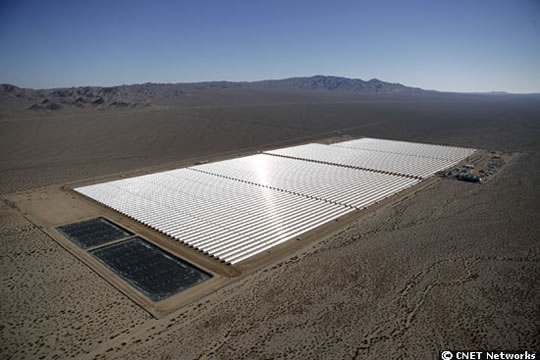
The US currently has about 700 megawatts of installed solar panel electricity generation connected to the grid, according to research by the consulting firm, Navigant. This represents less than 1% of all the electricity generated in the US.Each state controls the speed of solar adoption by heir independent policies. If these policies remain unchanged, generation from solar panels in the US, both commercial and residential generators are expected to grow to 6,000 megawatts by the year 2015.


Three thousand of the 6,000 megawatts will be generated in California. The incentive programs of California are the gold standard among supporters of solar power. Growth in the home solar-power market will not take off until more states adopt favorable net metering rules. The relaxed solar implementation can offset the cost of installing renewable power system and capture electricity that is being loss from the potential solar generation.


The Navigant report estimates that an additional 3,000 megawatts of solar panel electricity could be available in the next eight years if the states with solar implementation limitations lifted their caps.There are eight states that have no net-metering rules. These states are South Dakota, Kansas, Mississippi, Alabama, Tennessee, Florida, Arizona and my own state, South Carolina. A list compiled by New Energy Source lists California, New Jersey, Pennsylvania, and Maryland receiving the highest scores for solar adaptation with the remaining states of lower scores because of restrictive laws.


As of September 2007, 39 states had adopted some measures of rules to compensate consumers for sending self-generated renewable power to the grid. There is a lot behind the scenes that the states and power generation companies are willing to wage a serious fight to preclude Federal mandates to push solar renewable energy.In my state of South Carolina, the Santee Electrical Cooperative, which is owned by the state of South Carolina, is proposing a $998 million dollar coal burning generators. The site has been put on hold by the federal government for a deeper study of the environmental impact. Meanwhile, Santee continues the fight with their commissioned study. Their study concludes "$900 million in economic output, $500 million in earnings and 9,300 jobs for South Carolinians" Unfortunately; Santee made no attempt to study the environmental impact or what a combination of renewable/nonrenewable future actions would mean to the state.The federal renewable fuels bill has been stopped in the US Senate. Southern Co., American Electric Power Co. and other coal fired producers hired top Washington lobbyists, including Rudy Giuliani's firm, to help defeat a measure that would force them to boost electricity generated by wind, solar and other forms of renewable energy to 15 percent of the U.S. total by 2020. That's up from less than 2 percent today, and is a move the industry says would cost at least $67 billion. Southern Co. has spent $7.26 million this year lobbying Congress, more than Exxon Mobil Corp. or General Motors Corp., according to the Washington-based Center for Responsive Politics. It hired such firms as Bracewell & Giuliani LLP, where Republican presidential front-runner Giuliani is a partner. The bill would require utilities to obtain 2.75 percent of their power from renewable sources starting in 2010, ramping that up to 15 percent by 2020. Almost one-quarter of the mandate could be met by improving efficiency. Companies that fail to meet the standard would have to pay a penalty to the federal government. The cooperative of Southern Co and other generating companies consider this too high of a barrier and appear to have succeeded to remove the renewable fuel section from the bill going to President Bush.The average homeowner does not have a vote in adopting renewable fuels electrical generation standards. The battle is being conducted by the state and federal government and powerful electrical generating companies. The problem is that the average homeowner will be the big loser in this struggle. Our major recourse is to write our state and federal representative to adopt measure that we can utilize the potential cost savings and reduces pollution of solar generated electricity.Our letters to our government representatives should ask for means to:* Encourage greater renewable-energy generation * Promote customer-sited distributed generation (wind and solar fuels) * Reduce demand on an ever increasingly strained grid * Reward investment in renewable technologies * Facilitate energy independence * Improve air quality and public health * Promote in-state economic development.Most states that have revised their interconnection and net-metering policies have done so in pursuit of these same goals.Copyright (c) 2008 Paul Calhoun
I have a BS and MS in Metallurgical Engineering. Thirty six years spent in the development of semiconductors. Business experience in start up business plan. Currently, an oyster farmer and interested in helping the environment by deploying solar energy. Please visit my Web Site

http://www.charlestonenvironmentalhelp.com


Digg Technorati del.icio.us Stumbleupon Reddit Blinklist Furl Spurl Yahoo Simpy

Why We Need Energy Alternative

By: Phill Hopkins We are in the midst of an energy crisis. The price of a gallon of gas is sky high and there is a great deal of trouble-brewing in the Middle East, Iraq and Iran and other areas. These problems have made it clear to many United States citizens that we have an oil-driven economy.As Americans we need to develop new directions for energy supply and the production of it. We certainly need to reduce the dependency on oil and look for alternative resources. Experts believe there is no such thing as cheap oil and they will continue to pay a high price and in the future, it will be much higher. This expense will grow in the future unless we can locate alternative sources of fueling our technologically advanced civilization. We need to find innovative sources that can be alternatives to oil. Environmentalists would argue that we need to switch to other forms of energy because the present forms are damaging the atmosphere and climate.There are other issues as well such as global warming, and other means of destructing the environment such as air and water pollution.Coal is another source of energy that is counter productive. It is filthy and it is very hazardous to mine and is destroys the environment. We can also look towards new methods of producing electricity that we presently use so they have less impact on the environment. There are nations developing and becoming more industrialized that will also need the of alternative forms of energy research and development. Other countries are also contributing to the environmental damage. The United States, and other European nations have initiated studies to look for alternative energy sources, and could lead the way in doing far less environmental damage than the United States is.The developing nations need to look to the West who is in the process of getting help from the government and private companies who are researching alternative sources of energy. We could and should be at the forefront of research on alternative energy sources. We could certainly reap the benefits of marketing the technologies and services to other nations.There are alternatives such as Biofuels from trees and beans, hydroelectric technology and development, natural gas, hydrogen cells, atomic energy plants and the development of solar energy.More research needs to be done on the use of wind and solar power as well as the use of electricity and hydrogen. There is a great deal of potential out there if we widen our scope and look for alternative means to fuel our cars and maintain our technologically advanced society. Hopefully when we look towards the future it will be green.
Phill Hopkins writes on a wide variety of subjects, you are welcome to reproduce this article providing it is unchanged in any way and all links are retained. For more information visit http://alternative.yourinfoguides.com
Article Source: http://www.ArticleBiz.com


Digg Technorati del.icio.us Stumbleupon Reddit Blinklist Furl Spurl Yahoo Simpy

This Why We Need Alternative Energy Sources

Author: Bryan Wong

The need for alternative energy sources is getting urgent, hence the development of renewable energy is moving fast. Nationally and internationally various individuals and research companies are creating new and exciting energy systems. Some of these apparatus are great works and need improving for massive use. Politician's world-wide are drafting policies and are making agreements to make greater use of these energy sources.
The first problem is that the fossil fuels are depleting in a rapid rate and are harder to retrieve. The consequence is that we can be facing an energy crisis in the future is we are not careful today. The energy prices will sky rocket and not be available for many individuals or countries. To avoid this doom scenario we need to find alternatives and used them to their full potential. Luckily this is already happening.
The second problem is that the fossil fuels that are widely used today are harmful for the environment. In the early seventies and eighties there were people and even scientist who preach otherwise, but today the negative effects are showing. The earth is warming up and climates are changing. There are parts in the world were there be more rain and sunshine and others parts will be come dryer then they already are. Another negative effect is that the ozone layer is getting thinner which also leads to a warming up of the earth. These two effects compliment each other and make it even more crucial to make another step in a different direction. This step will lead us to the use of renewable energy.
Another problem lies in the development of small economies. Because the energy prices for crude oil are going through the roof, these countries suffer even more. Many of these countries need crude oil for their electricity and means of transportation. These high oil prices have their effect on almost everything. The monthly electricity costs for households increase among others like transport cost and prices for basic products. Hence, these high oil prices make it harder for these small countries to grow there economies.
The solution for the above problems can be resolved by renewable energy. Our beautiful planet gives us the opportunity to make proper us of sunlight, flowing water, strong winds, and hot springs and convert these into energy. These energy sources are abundant and free to use. We must be sure that we convert the energy the right way, without causing other problems that can again hurt our environment. Luckily the many efforts by individuals and companies show that this can be done.

About the Author:Bryan Wong is the owner of the renewable-energy information website www.GetEasyInfo.com/renewable-energy > - A great website that shares quality Info, News and TIPS on Renewable energy.


Digg Technorati del.icio.us Stumbleupon Reddit Blinklist Furl Spurl Yahoo Simpy

Renewable Energy Resources versus Fossil Fuels

Author: Bryan Wong

In modern western world the demand for energy has increased dramatically in the past century and it will grow even further and harder in the near future than ever before. The need for energy rises with upcoming markets that also need more energy. Energy is needed for cars, buses, and other means of transportation, but also to run our appliances and provides us light. Energy is also important for our safety. At night or in the dark a lot can be stolen without proper lightning. Energy is therefore needed for our development and safety.
The way we use energy today comes from knowledge that has it's foundations in the past century and before. Great men like Newton and Philips have set the path for us today to make proper use of energy. The sources which we use for our energy demand are known as non-renewable energy resources. These sources will be discussed here in the article.
Definition of Non-Renewable Energy Resources
The name really explains it very well. Non-renewable energy resources are natural resources that cannot be recycled or re-grown. These natural resources are fossil fuels like coal, petroleum, and natural gas. It also includes mined resources such as the elements used in the production of electricity (uranium and plutonium, for instance). These resources replenish itself in a quicker rate.
Fossil fuels are very versatile. One of their functions is to generate electricity. In order to generate electricity, fossil fuels are burned through the process of combustion. The energy produced from the combustion process is used to power a turbine. The turbine is responsible for the conversion of energy produced from combusted fossil fuels into electricity.
Coal
Coal is one the most used fossil fuels. It is consider too be the most important energy source to produce electricity. The U.S. produces 50% of its energy supply through the combustion of coal. The coal itself is a brownish-black sedimentary rock which contains carbon and other assorted elements. It is extracted from the ground through underground mining or open-pit mining.
Natural Gas
Natural gas is also used to produce electricity. The electricity is produced through steam turbines and gas turbines. Because the gas contains methane the combustion emits less harmful gasses that have a negative effect on global warming. Thus natural gasses are better for the environment compared to petroleum and coal.
There is also another use for it and that is as fuel for cars. It is much cheaper that gasoline and produces less harmful gasses. The disadvantage of running your car on natural gas is that you need more fuel compared to gasoline and the car needs more maintenance. In countries like Argentina, Brazil, Pakistan, Italy, The Netherlands and India it is used as a fuel for cars.
Crude oil
This fuel is the most talk about for the past year(s). The prices for crude oil have gone through the roof and will be rising even more. The demand is increasing while there is less crude oil available. The term black gold is now more applicable than ever before.The oil itself is very think in consistency and has a dark brown or greenish colour characteristic. It is a complex mixture of different hydrocarbons. Crude oil or petroleum has various uses. It can be used as fuel or cars and different industrial machines. It is also used as a raw material for products like plastics, solvents, fertilizers and pesticides. Although the need for crude oil is high and the demand is rising the available crude oil is decreasing. That leaves us no other option than to look for alternatives.
Non-renewable energy plays a very important role in our daily lives. Non-renewable energy will be needed today and in the future. Because this energy source cannot be recycled or re-grown the reserves are limited. The consequences of the shortages of fossil fuels are experienced today and tomorrow. We will need to use these fossil fuels wisely and will need to shift our focus to other renewable energy source. These are the sources that we need to focus on today and years to come.

About the Author:Bryan Wong is the owner of the renewable-energy information website www.GetEasyInfo.com/renewable-energy > - A great website that shares quality Info, News and TIPS on Renewable energy.


Digg Technorati del.icio.us Stumbleupon Reddit Blinklist Furl Spurl Yahoo Simpy